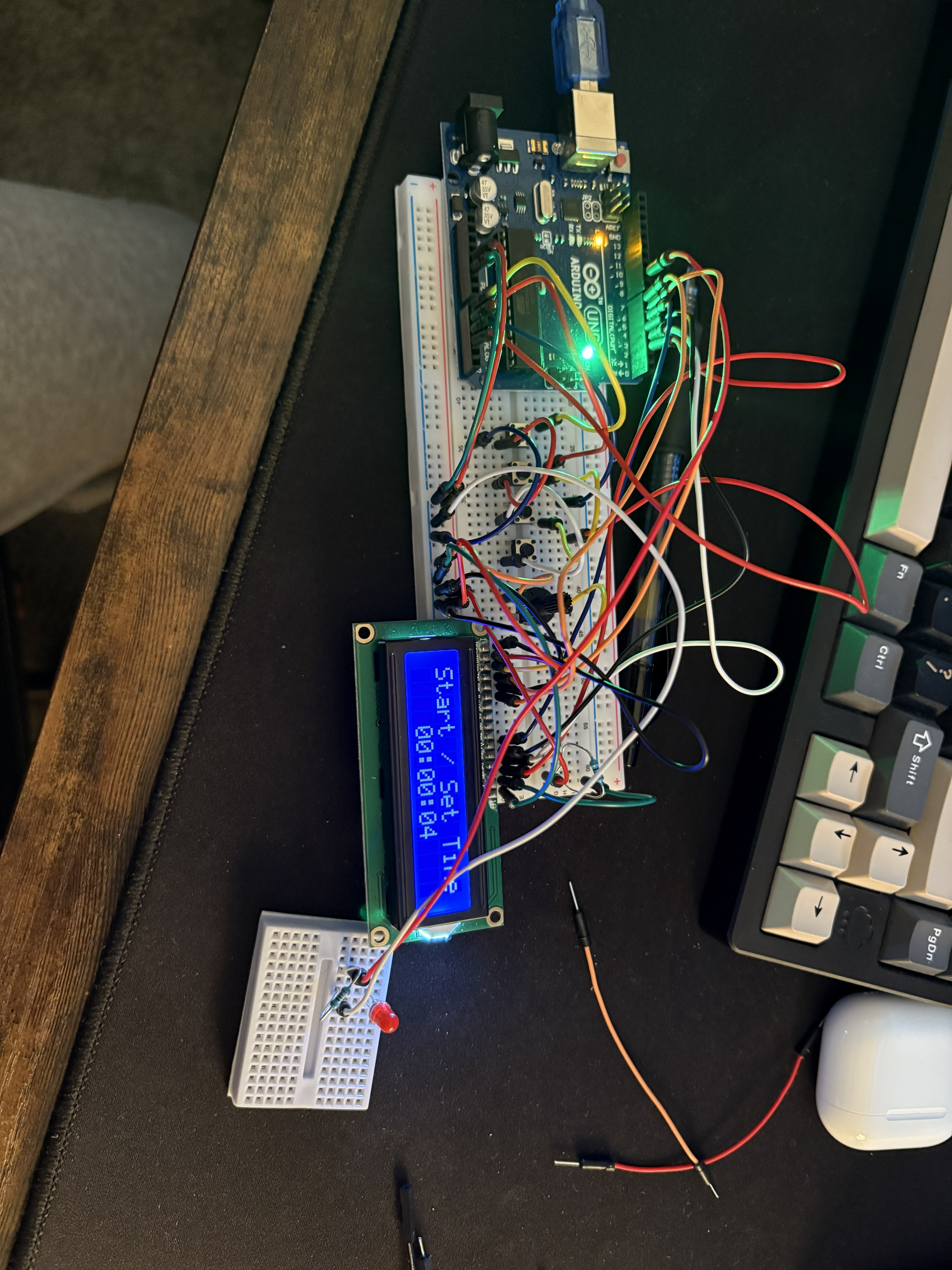
Countdown Timer
Using Arduino
Developing a low-cost, high-efficiency countdown system to demonstrate embedded system logic and real-time user interface integration.
CAD / Mechanical
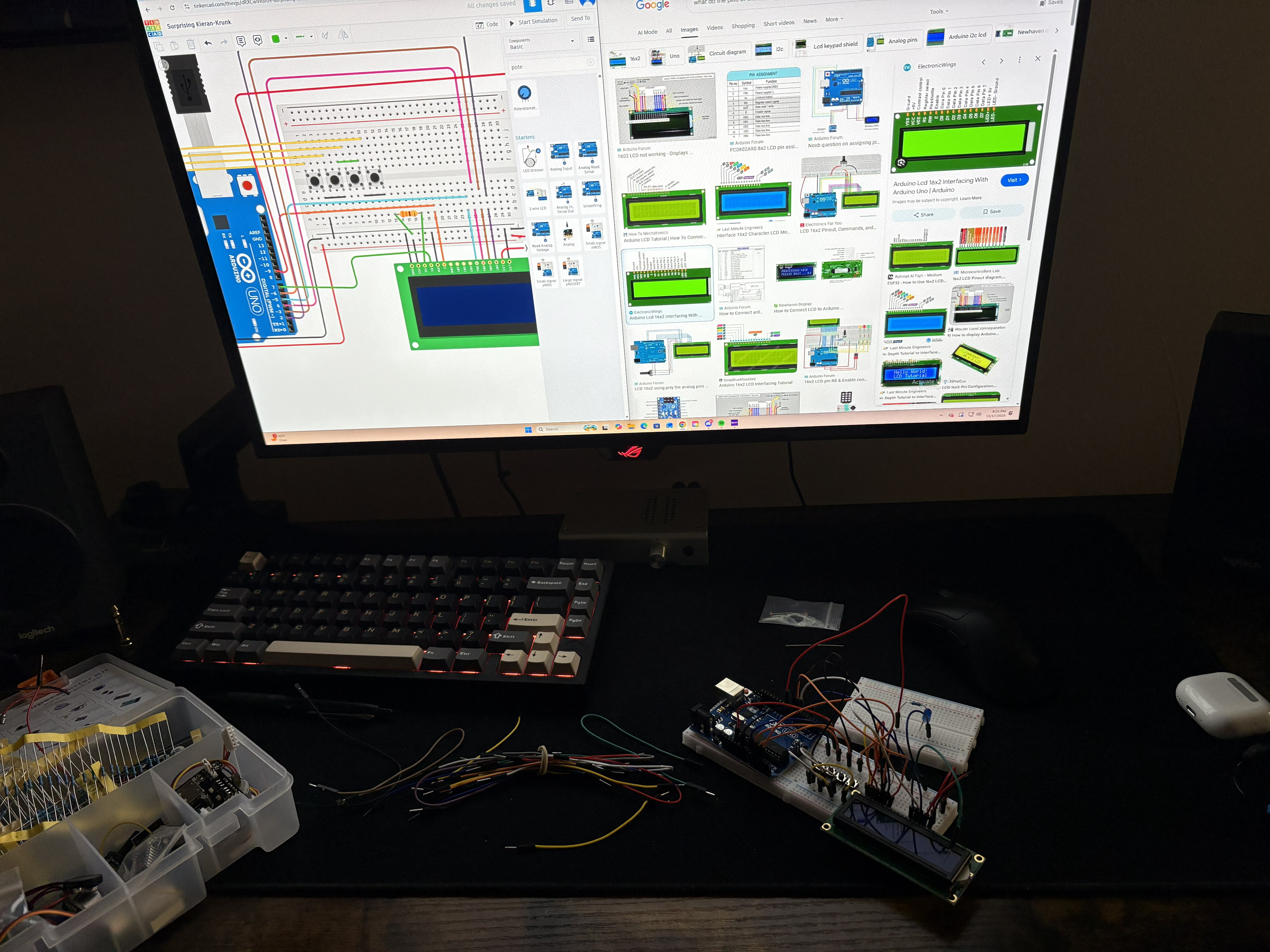
Tinkercad
Electronics
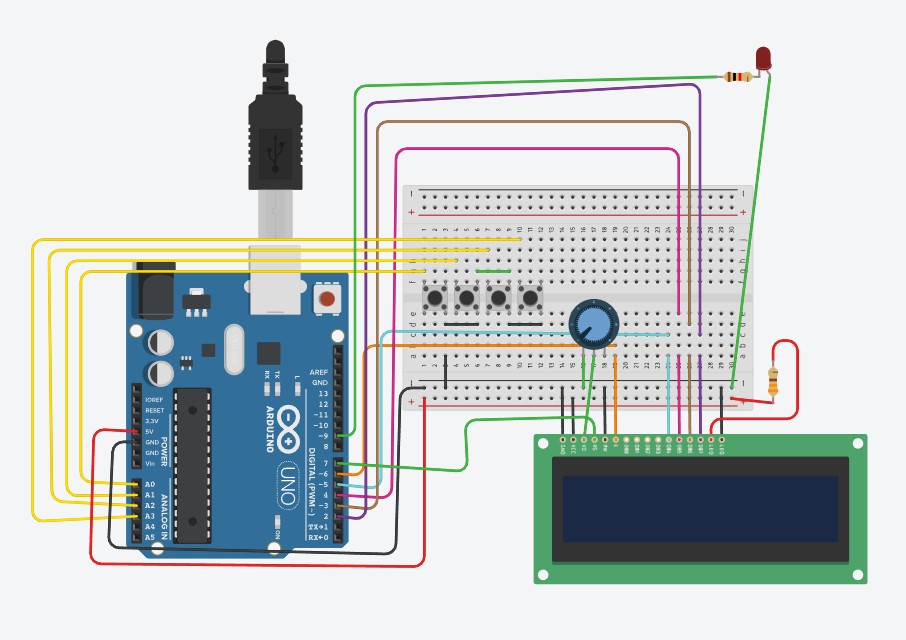
Arduino Uno, LCD Screen, Potentiometer
Software
C++ (Arduino Library)
Core Skills
Circuit Design, Embedded Systems / Microcontroller Programming
// Design & Execution
Engineering Logic
The firmware manages state transitions between user input (time setting) and the active countdown phase. Interrupt-driven logic ensures the timer remains accurate while simultaneously refreshing the I2C LCD display.
Critical Design Choice
Integrated a potentiometer for analog time adjustment instead of tactile buttons to simplify the UI and reduce the overall component footprint on the breadboard prototype.
// Unit Economics
| Component | Unit Cost | Qty | Total |
|---|---|---|---|
| Arduino Uno | $27.60 | 1 | $27.60 |
| Jumper Cable | $0.03 | 26 | $0.78 |
| LCD Display | $3.67 | 1 | $3.67 |
| Potentiometer | $0.90 | 1 | $0.90 |
| 220 Ohm Resistor | $0.05 | 2 | $0.10 |
| Red LED | $0.05 | 1 | $0.05 |
| Switch Buttons | $0.05 | 4 | $0.20 |
| TOTAL UNIT COST (PROTOTYPE) | $33.30 | ||
Optimized Production (ATmega328P Implementation)
Transitioning from Dev-Board to Dedicated MCU
$7.20 / Unit
78% COST REDUCTION
// Problem Solving
The Failure
LCD contrast was too low, causing there to be white characters on a white background and the screen to be unreadable.
The Pivot
I provided a smaller voltage to the V0 pin, by using potentiometer and adjusting the resistance until the letters are visible.